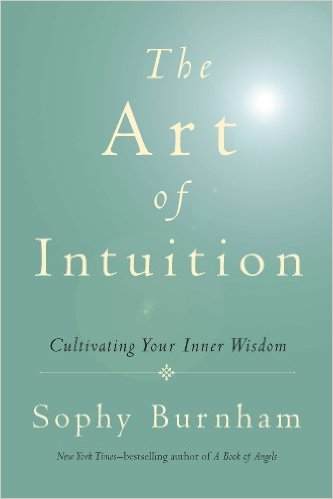
The Art of Intuition: Cultivating Your Inner Wisdom by Sophy Burnham
Summer is the perfect time to catch up with reading, especially books you’ve had every intention to open months and months ago! Well, in my case I use the down time the season brings to read new books, as well as a few I’ve already read. The Art of Intuition is the latter. Consider it a refresher for me, a reminder to trust my intuition and to have faith that my experiences have cultivated inner wisdom.
The Art of Intuition confirms and affirms what I innately know but sometimes lose sight of now and again: Intuition is my guide. Following that “feeling” will lead me in the right direction and keep the woulda-coulda-shoulda syndrome at bay. You know exactly what woulda-coulda-shoulda syndrome is; it’s any moment when “something” (God, The Creator, Universe, angels, spirit guides, and so on) is telling you exactly what you need to do but ego says,”That’s illogical,” creating a mental road block. You listen to ego and end up saying one (or possibly all) of the following: “If I would have done…I could have done…or I should have done…”
What is intuition anyway? Burnham describe it as “a hunch, a gut feeling, an inspiration, or premonition, precognition, clairvoyance, clairaudience, clairsentience, prescience, second sight – the shiver of “knowing” that pierces the veil of time and peers briefly into the future or at least into what’s not happened yet. It’s a decision made so fast you don’t know how you reached it: “It came to me,” you say. The root of intuition is related to the word tuition, from the Latin tueri, meaning “to guard, to protect.” For no rational reason we suddenly know: “Go here, not there!”or sometimes: “Stop!” If we’re alert we respond instantly, because intuition is always right.”
With detailed instructions, Burnham shares how we can identify the various ways intuition reveals itself and practice strengthening that awareness, as “intuition comes to each of us in its own personal way.”
She also provides understanding by sharing inspiring real-life accounts from individuals who have followed their “gut feeling” and their amazing experiences as a result of trusting that inner guide.
This book is definitely helpful with my goal to continue developing my intuition so that I’m making healthy decisions from an empowered place that supports and protects my purpose in life.
Hey, Phoenix! Have you read this book? If so, tell us, in the comment section below, how it has supported your personal growth. If you have an intuition story, please share that, too.
About The Phoenix Book of the Week:
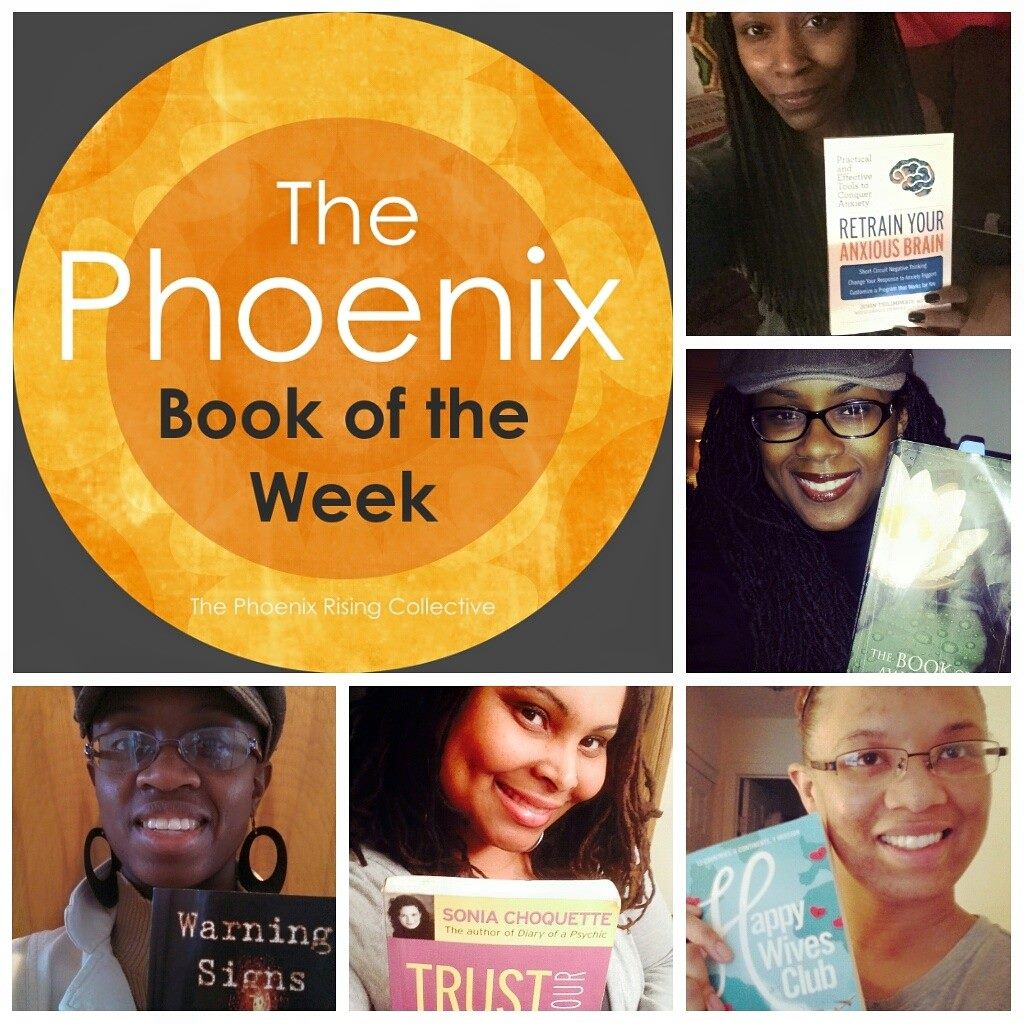
The Phoenix Book of the Week features book recommendations from The Phoenix Rising Collective, as well as the empowered women who support us. We’ll be sharing our thoughts on books that have been powerful resources for sustaining healthy self-esteem, creating emotional and spiritual wellness, and committing to intentional living. We’ll also share our personal stories about how and why the books have inspired personal growth and sparked “light bulb moments” that changed our lives in some way. The book picks may cover a wide range of topics from diverse genres.
Interested in sharing a book with us? Please click here to send your request for more details on submitting a book entry.
The Phoenix Rising Collective’s Artist Feature, curated by Traci Currie, interviews women artists who use their talents and creativity to fully express self-love, build self-esteem, and nurture their own authenticity while inspiring others. Creative expressions may range from performing to painting to writing to travel and everything in between. Our goal is to share how these empowered women cultivate agency, healing, and happiness through fulfilling their passion.
This Artist Feature is Simone Savannah.
Writer and Poet, Simone Savannah
Bravery delves into those uncommon territories of one’s life. It’s the areas we do not speak of. The places we do not venture because they are painful, scary, or require us to be vulnerable beyond measure. This idea of exploration is often linked to walking into the unknown. We all know that common Star Trek theme: To boldly go where no man has gone before. My question is “What do you find when you go to places you have never been or have tucked away in your life?” Many would say, “You find yourself.” This statement describes the artist feature for this month: Simone Savannah.
I’ve watched this woman poet for over a decade – as early as her high school years to the present, as a doctoral student in Literature and Creative Writing at University of Kansas. What I remember most about Simone’s earlier years is her smile. Even when a situation was rough, she found room to chuckle, and there it was – white teeth rounded to perfection as a ray of sunshine. Yes, her smile!
Most recently Simone published the poem Like Want For Having with an independent press called Big Lucks. When I read her poem I found myself focusing on specific words that spoke to intimacy, desire and sexual prowess. Her words were concrete and abstract, bouncing between the two. I had a raised eyebrow because this was a side of Simone I did not know but had peeked my interest. When we talked, our conversation actually started with Simone’s mother with whom I share a name – Tracy. She told me about her mother’s death and I realized this was the focal point of Simone’s exploration of intimacy.
Photo Credit: Cover Art for Big Lucks, Issue #09
The deterioration of her mother, Tracy, started with the gastric bypass surgery. Complications from the surgery worsened her health – leading to a breast amputation, an affected leg and later surgery on her coronary arteries, from which she never recovered.
Simone’s mother died at age 37, and Tracy’s mother also died the same age. When she told me this I asked how this made her feel. “It’s pretty scary. I didn’t get a chance to meet my grandmother. I don’t see it as a pattern, though. I take it as a sign to take care of myself.” Simone’s mother battled anxiety attacks but Tracy’s mom dealt with alcoholism. My inquiry about Tracy’s anxiety led to Simone sharing that her sister (10 months older) had been given up for adoption. Similarly, Tracy was also adopted. She was depressed after giving Simone’s sister up, but then Simone was born and her brother noticed a change. He felt the adoption and her birth helped Tracy to create healthier relationships with her children and with men.
Simone explained she didn’t have the same abusive experiences her older siblings had with Tracy. She said, “My mom was my best friend when I was little.”
Our conversation transitioned. Simone began sharing Tracy’s troubling identity. While her mom was in the hospital she sneaked away to read her journals. “She was very clear about what people said about her weight. She was very clear about everything in the end. Men she had relationships with called her fat.” She never expressed these things to Simone but she wrote about these experiences. “It was odd because everyone knew her as a beautiful woman. She seemed confident on the outside but people didn’t know what she was going through. It hurt reading those journals.”
I began to understand Simone’s frustration. “It makes me so mad when people talk about my mother’s relationship with men because it was so negative. It revolved around sex and the fact that she had a lot of children.” She shared a tidbit about people mentioning Tracy using sex as medicine. She didn’t like the fact that there was a deviant connection to the act of sex versus the idea of simply enjoying the act itself.
I hadn’t pondered this thought because I have been told way too many times that sex is for something specific, often affiliated to religious doctrine. Granted, if you watch enough movies, you’ll get a variety of views on sex and its purpose. What we explored in our dialogue was the idea that sex fits into a box for numerous reasons – it is the topic parents don’t always want to address with their developing teenagers; the rules of what one should do when having sex (what’s nasty and what’s not); diseases connected to sex; the aftermath of sex; what sex looks like with or without clothes. And those examples aren’t even scratching the surface.
“I think it is funny to put sex in people’s face. I don’t see why we have to keep it private. I have no problem talking about exploring my sexuality publicly and the policing we do with sex.” She enjoys being funny in her poems but more importantly she likes contributing to a needed conversation revolving around sexuality, marriage and domesticity, especially when the discussion is imbalanced and it becomes one-sided or a double standard. She feels more voices should be included in this poetic dialogue. “My personal life and what I make up about it is almost always connected to something larger, something political like how we sexualize women and harass them on the street, or how we don’t give permission for (black) women to talk about their experiences as women, such as abortion or street harassment.” I related her comments to her poetry and why she writes. “Writing about these topics is very much about creating poetry – what can I do with these moments, these experiences? How can I write about them in a funny way or a serious way? How can I turn these moments into a page, a poem? Poetry is a place for me to be more creative…to try different things and to break rules. I feel freer in poetry. I can be anything I want in a poem.”
What I’ve learned from this artist is how important it is to acknowledge and even speak of the discomforts that block us from understanding why we do what we do and how our actions, as well as others’ actions shape our identity. But oh, how empowering it is to use the arts to address the concerns we aren’t always willing to face behind closed doors! Simone Savannah is walking this journey of self-discovery, both intimately and publicly. I give thanks, because from one artist to another, she empowers me to speak of the intimate things I have also tucked away in corners for way too long.
More on Simone Savannah:
Simone is from Columbus, Ohio. She is currently a PhD student in Creative Writing at the University of Kansas developing her interests in sexuality, Modern and Contemporary women’s poetry, and African American literature. She served as the Assistant Poetry Editor of Beecher’s 3. Her work has appeared in Blackberry: A Magazine.
About the Contributing Writer:
Traci Currie is a Communication and Visual Arts lecturer at University of Michigan-Flint, as well as a knit-crochet artist, writer, and spoken word performer. She has been a part of the art world for over 15 years as an art gallery board member; spoken word series organizer; performer, nationally and internationally; and published poet. She believes The PRC will help young women reach their highest potential. “This organization is about empowering women to take ownership of their lives, claim their identities and be the positive change they wish to see in the world they live.” Read her latest posts.
Take time to reflect, and do it in a sacred space – one that you create or one that you find. This is a beautiful park I found; I’m at the top of the main hill there. As you can see God most certainly resides in this space, so I took a moment to sit with myself and think about what I’ve learned over the last six months while accomplishing my goals, connecting with people, and just living life.
Summer is for rejuvenation; the season provides a chance to assess what is working in our lives and to let go of what is not so there is balance, clarity, and preparedness for fall.
So, make time for personal reflection; make time for mindfulness to replenish your soul and creativity. Let it be a priority so that you are able to move forward with intention, purpose, and a healthy well-being.
Be self-love in action. Love + light, Phoenix!
Ayanna Jordan is founder and self-esteem education consultant of The Phoenix Rising Collective; she is also the editor-in-chief for Phoenix Shine, The PRC’s blog and spirit-affirming online community. She has always had a passion for inspiring others through writing, coaching, and teaching. Her diverse career experiences have positively shaped her overall perspective on what it truly means to be a change agent: “I believe a change agent is someone who is in alignment with what she loves to do, and then connects, utilizes, and shares that love to make a difference and transform lives.” Learn more about Ayanna HERE.
Love Yourself First! Friday (LYFF) is part of ourShed Light series collection. We invite women to tell their LYFF stories to inspire and empower others to also fiercely demonstrate self-love in action. The questions are meant to “shed light” on various ways our featured Phoenixes are making self-care and intentional living a priority.
This week’s brave Phoenix is Meaghan:
How do you love yourself first? What does that mean to you?
Loving myself first means three things to me: forgiving, showing up, and sharing.
Forgiving myself: Since I was a child, I have been told I am just too sensitive, thin-skinned, needlessly vulnerable. I have always felt things incredibly deeply, and it shows. For a long time, I allowed others to take advantage of this part of me and even chastise me for it, telling me it was a flaw, a softness that needed to be hardened. But loving myself started with forgiving myself for these perceived weaknesses, which then opened up the opportunity to protect my vulnerability, and even, to insist upon it being something helpful and constructive.
Showing up for myself: Once I learned to embrace the complexities of my emotional life, I was more ready to defend, preserve, and nurture it. This meant being more verbal when I felt I was being mistreated or ignored or emotionally abused; it also meant coming to the difficult and liberating conclusion that no one else was going to do this for me. As it goes, when I began articulating my worth, I lost some people who I thought were my friends. But the process has left me with a small, strong group of people I consider my chosen family. They respect, love, and appreciate me.
Sharing myself: Once I learned to accept, appreciate, and defend who I am, I became more ready to share myself with the world. Part of loving myself means using my talents, intellect, and skills toward something that fulfills me: right now, it is through teaching and contributing to Human Rights scholarship. I hope to continue doing this once I graduate: I wish for myself a fulfilling life, and it’s my intention to show up and make that dream a reality.
“I am learning how to embrace the beauty of my body…” -Meaghan, LYFF Feature
What actions demonstrate the self-care you provide to your mind, body, and soul?
My favorite part of self-care has been creating rituals. My oil baths are legendary in my household, my partner understanding that this time is my time: I use organic oils and salts in a warm bath, and sink into the water with candlelight flickering around me. I light incense, and on a particularly tough day, smudge the space with sage. It is my moment with the divine, where I cleanse and nourish my skin and my mind after work. It helps me shed the stresses of the day.
I have discovered great solace in yoga, and practice at least 3 times a week staying present, feeling graceful (sometimes clumsy!), and building strength. This, in addition to weekly cardio, helps to keep my mood elevated and my mind clear. My personal fitness routine has helped me build a completely new self-image: instead of the un-athletic gym class dropout I thought I was, I know now that I am, in fact, made of poetry and sinewy muscles that can balance, extend, and flex.
Is there an obstacle or challenge that you’ve overcome that led you to a deeper love for who you are?
So, I am going to overcome an obstacle just by writing this answer, and in so doing, I hope to demonstrate my idea of what self-love is. I live with depression, a mental illness that affects women and men around the world. As I grow and change, my depression changes with me. It has had different iterations, and manifests itself differently at different stages of my life. One of the most difficult stages was when I was a freshman in college: I was feeling profoundly alone, and with no one to confide in, I began having thoughts of suicide. I had no desire to eat, was losing weight rapidly, and did not leave my dorm room for days on end, save to go to class. It wasn’t until I had the courage to call my mother, and tell her that I was not doing okay, that I had been thinking of ways to quietly end my life. I told her how I was feeling, and asked her for help (Thank you, Mom, I love you). That was seven years ago, and I could not be prouder of my 18-year-old self for reaching out, and for continuing to struggle. While many may think that this was a time of weakness, I see it as a display of strength. I wanted to keep fighting, and fight I did.
I am writing this now because I made that phone call. I helped save my own life.
I reject the notion that we need to be quiet about these experiences: no one should ever suffer in silence or isolation. Our cultural stigmas around depression and other mental illnesses breed silence, and I refuse to perpetuate this damaging norm. If you are suffering, please tell someone. There are people who care about you, who want to help you leave this pain behind, and want to help you embrace your beautiful life for everything it could and will be.
I look back on that time, that person, with compassion and sadness. I see now I rarely allowed myself to dream: I was so enveloped in my depression that I could not see myself growing up or growing older. I did not think I would make it so far. I am learning now what it’s like to have a vision for my future, and it is overwhelming and wonderful and absolutely terrifying all at the same time. I see a social worker for therapy, practice mindful meditation, and read books that address the sources of my depression: for me, it is shame. Shame is a very powerful thing, as an emotion and as a socially constructed tool to keep women caged. Brene Brown’s book I Thought It Was Just Me (but it isn’t): Making the Journey from “What Will People Think?” to “I Am Enough” both articulates this struggle in the context of womanhood and provides some resources for how to cope with shame. It has provided me new ways to protect my vulnerabilities and use them constructively, to build a new idea of who I am and who I want the world to know.
What have you learned from self love?
Oh, I have learned so, so much from self-love, and continue to learn more. I have learned I am worthy, that love for myself multiplies and becomes love for and from others. I have learned that treating myself with compassion means I am more ready to treat others with compassion. It has given me a sense of belonging and community, a sense of possibility and a lasting relationship with myself.
Meaghan also tunes in to self-care through writing and receiving love from her cat, Chickadee.
Meaghan’s LYFF Collage:
Here’s a little more about the photos she selected:
Top Right + Bottom Left: I have a lot of fun trying on different types of self-presentation, and I think style is a great way to express a multi-faceted personality. It is something accessible and fun for me, and helps me to take myself not-so-seriously.
Bottom Right: I am learning how to embrace the beauty of my body, to celebrate its strength and accept its flaws. This is a new concept for me, one I’m still exploring.
Thanks, Meaghan for sharing your LYFF story! You are definitely a Phoenix Rising.
Join the Collective. Share your self-love story with us. Send an email HERE. Put “My LYFF Story” in the subject line, and we’ll send you follow-up info. Sweet. Short. Simple!
Love Yourself First! Friday is a bi-weekly self-love series created by The Phoenix Rising Collective. Phenomenal women who fiercely demonstrate self-love in action in order to build and sustain healthy, positive self esteem share their stories. Be sure to read some of our other inspiring stories.
Love Yourself First! Friday (LYFF) is part of our Shed Light series collection. We invite diverse women to tell us their LYFF stories to inspire and empower others to also fiercely demonstrate self-love in action. The questions are meant to “shed light” on the diverse ways our featured Phoenixes are making self-care and intentional living a priority. This beautiful Phoenix is Natasha:
How do you love yourself first? What does that mean to you?
Like so many women, loving myself first has been a challenge. Women, in particular, are socialized to care for and assume responsibility for others in ways that can be detrimental to wholly loving and caring for ourselves. We’re conditioned to be “givers.” This isn’t a bad thing. It’s a wonderful quality but women should also be encouraged to be givers to ourselves as well. At 33 years old, I am finally learning this lesson. I have finally heeded the advice of my husband, mother, and friends. I now take time to nurture myself through writing, performance, and other creative pursuits. I read, meditate, and do yoga. I make the time to regularly get with my close girlfriends (see photo below of Natasha with her Goddess Squad) who provide me with constant encouragement, enlightenment, good food, and laughter. Loving myself first also means treating myself with compassion. So often, I would beat myself up trying to be the perfect mother, wife, career woman, friend, mentor, student, daughter, etc. I’m getting better at saying “I’m doing the best that I can. That’s all that I can do, and it’s enough.” Loving myself means honoring my process and embracing my authenticity. It means knowing that I am abundant and absolutely worthy of giving AND receiving.
What actions demonstrate the self-care you provide to your mind, body, and soul? (Exercise, healthy eating, spiritual practice, etc.)
I am very big on meditation, mindfulness, and yoga. I jump between Iyengar, Vinyasa, and Kundalini yoga. I also do strengthening core exercises. I don’t follow any particular diet but I am mindful of what I put in my body, and I eat in moderation. I love creating a very Zen-like environment in my home. There is lots of natural sunlight. I like fresh flowers, candles, and art. It’s important to me that my space reflects the beauty of nature. I am heavily influenced by indigenous spiritual practices and am an I-Ching practitioner. I also like to sing, dance, and play with my kids.
Is there an obstacle or challenge that you’ve overcome that has led to a deeper love for who you are?
I am learning the importance of emotional self-sufficiency. It involves honoring my emotions by owning them. It’s really rooted in the understanding that others are not responsible for my emotional health. I now understand that having an emotional state that is predicated on other people’s actions is like living your life on shifting sand; you will always live in that unstable and reactionary place. I’ve made a conscious decision to shy away from that kind of co-dependence and to know that authentic happiness comes from my internal source.
What have you learned from self-love?
I’ve learned that self-love is not a destination. It’s an ongoing, lifelong process. There will be an ebb and flow to it. There are so many elements in this world that work very hard to prevent us from fully loving ourselves as we are. So, it’s a constant challenge. There will be days where I won’t be so good at it and that’s okay. It’s really all about the process of constantly growing in ways that require me to keep unveiling and rediscovering myself. _________________________________________ We asked Natasha to also submit photos demonstrating self-love in action or even photos that radiate the feeling of loving who she is. We created a collage (shown above) of the awesome images she chose to share:
Top left – Showing a naturally beautiful representation of happiness
Top right – Sharing her Mala prayer/chanting beads and rice bowl for meditation
Bottom left – Spending time with her son and the participants in her RAISE IT UP! program; Natasha is the co-founder and executive director.
Bottom right – Meditating with her sons
Thank you Natasha for sharing your LYFF story with us. You are a Phoenix rising! Happy Friday. __________________________________________Love Yourself First! Friday is a bi-weekly self-love series created by The Phoenix Rising Collective. Diverse women tell their stories of triumph, share their personal affirmations, and declare their love for their own lives! The series is meant to inspire and empower women to fiercely demonstrate self-love in action in order to build and sustain healthy, positive self-esteem. Be sure to read some of our other inspiring stories
#Throwback to Book Picks of the Week! We want to pick up momentum with this series again so share what you’re reading this summer.
It’s simple. To be featured just pick your favorite book, take a selfie with it, and tell us how it’s been a self-esteem booster! Share how it has inspired personal growth and sparked “light bulb moments” that changed your life in some way – physically, emotionally, or spiritually.
Books may cover a wide range of topics/genres. Send to: info@phoenixrisingcollective.org
Check out other Phoenixes’ book picks and the “light bulb moments” they shared from reading them, HERE.
________________________________
About The Phoenix Book of the Week:
The Phoenix Book of the Week features book recommendations from The Phoenix Rising Collective, as well as the empowered women who support us. We’ll be sharing our thoughts on books that have been powerful resources for sustaining healthy self-esteem, creating emotional and spiritual wellness, and committing to intentional living. We’ll also share our personal stories about how and why the books have inspired personal growth and sparked “light bulb moments” that changed our lives in some way. The book picks may cover a wide range of topics from diverse genres.
Love Yourself First! Friday (LYFF) is part of ourShed Light series collection. We invite women to tell their LYFF stories to inspire and empower others to also fiercely demonstrate self-love in action. The questions are meant to “shed light” on various ways our featured Phoenixes are making self-care and intentional living a priority.
This week’s beautiful Phoenix is Nakshidil:
Nakshidil on the beach in Mauritius.
How do you love yourself first? What does that mean to you?
Self-love to me means waking up in the morning and feeling in tune with my mind, body and soul. It’s the positive energy that courses through my body when the sunlight hits my skin or that sense of euphoria that engulfs me on demand.
My drive and determination to constantly feel the love that surrounds me is what I use as my fuel to grow and bask in my passions. I think that’s one of the most important parts about self-love; it’s the ability for someone to understand herself in a profound manner that yields acceptance. Being able to wake up every morning and accept who you are and where you have been is the most powerful weapon on earth because it ultimately acts as a motivator.
What actions demonstrate the self-care you provide to your mind, body, and soul? (Exercise, healthy eating, spiritual practice, etc)
One of the things my mom has always told me and it continues to resonate with me is that life is volatile; you need to enjoy the simple pleasures of life while you can. I am a lover of clouds. I often stop in the middle of what I am doing if I am outside just to admire them. I love laying down under trees in the shade and watching the way the sunlight hits the leaves. It makes me feel at peace and I can remove myself from the hustle and bustle of my daily routine and hectic surroundings.
I make it a point to take a few minutes every day to do the superman pose. I stand tall with my hands on my hips and look at the sky. I take deep breaths and tell myself I’ve got this. I can do this. Today is my day.
I have also realized the importance of doing the things I love when I feel like it and to invest myself, wholeheartedly, in everything I undertake.
I cook often because I love food. It’s therapeutic and soothes my mind.
Being around my friends and family brightens my day and I find solace in seeing those dear to my heart happy, so I try to spend as much time as possible around the people I care about most.
Another thing that makes me feel alive is dancing. I find every opportunity I can to dance. Whether it’s raining, music or no music, while shopping – it brightens my soul and makes me feel alive.
Is there an obstacle or challenge that you’ve overcome that led you to a deeper love for who you are?
I think that moving to America for my undergraduate studies was one the biggest obstacles and adventures I embarked on. The culture shock and being away from home (alongside several different personal experiences) made me understand that self-love and acceptance of the different experiences that I have been affected by are what make me who I am. It has transformed me into the woman I am now. I have found strength in times of weakness, determination in times of despair, and love in times of pain.
What have you learned from self-love?
I have learned that I am my biggest supporter and I am stronger than I know. Self-love has taught me that in order to heal I need to accept, and once I have accepted I can begin building my foundation for empowerment.
Nakshidil’s LYFF Collage:
Here’s a little more about the photos she selected:
Top Right – “I was giving a speech at an event during my time as Student Government President of UM-Flint: The photo reminds me to never lose track of my passions, goals, and objectives. It reminds me that impossible is nothing and that if you set your mind to something you can achieve it as long as you have the will power to do so. It’s a testimony to my intense year as president, but in that moment it all made sense because of how happy I was doing what I love to do.”
Bottom Left – “My family back home. My rock. My foundation. My constant. They are my biggest motivators and support system and I wouldn’t trade them in for the world. This photo is a reminder to never forget my roots, my culture and the important people in my life.”
Bottom Right – “I’m in Mauritius on the beach (it was a gorgeous day out, the clouds were stunning, the sun was shining bright, and the sea water was crystal clear). It reminds me a lot about the simple pleasures in life. Sometimes you need to just take a break, kick off your heels, let your hair loose, and feel the moment.”
Thank you for sharing your story with us, Nakshidil. You are definitely a Phoenix Rising!
___________________________
Join the Collective. Share your self-love story with us. Send an email HERE. Put “My LYFF Story” in the subject line, and we’ll send you follow-up info. Sweet. Short. Simple!
Love Yourself First! Friday is a bi-weekly self-love series created by The Phoenix Rising Collective. Phenomenal women who fiercely demonstrate self-love in action in order to build and sustain healthy, positive self esteem share their stories. Be sure to read some of our other inspiring stories.
Love Yourself First! Friday (LYFF) is part of ourShed Light series collection. We invite women to tell their LYFF stories to inspire and empower others to also fiercely demonstrate self-love in action. The questions are meant to “shed light” on various ways our featured Phoenixes are making self-care and intentional living a priority.
This week’s adventurous Phoenix is Miriam:
How do you love yourself first? What does that mean to you?
Loving myself is a complicated thing and sometimes I’m exceptionally bad at it. I think the secret (and the challenge) is finding ways to live in the moment – to let go of versions of myself in the past and the versions I am worrying about in the future. That’s really hard to do, but the goal is to forgive myself for being human, to accept my flaws, to work to address them, and to live my life developing into the best human being I can be. Doing all this is like watering your garden and warming up it with golden sunshine in spring so that you bloom into your own unique flower.
There are values that are sacrosanct, that define what a healthy, fulfilling life is for me. If I’m not feeling fulfilled then I’m unhappy, and if I’m unhappy then I’m not taking care of myself in the ways I need to feel that. For example, being upfront about my needs with people can feel really awkward because I’m not used to doing it. I’m an INTJ/INFJ – very internal, and I don’t like conflict (see Emotional Intelligence Assessment). But I learned the hard way that if I don’t speak up for myself about what I want and honestly try to engage others to find a solution that works for both of us – whether it’s something as minor as scheduling where and when to eat lunch or as major as figuring out how much of a salary I deserve – the price I pay in the end can be very high emotionally and even physically.
It can also be little things like telling friends, “I am not being social for a few weeks so I can get the emotional charge time I need.” I used to feel really ashamed and “not normal” about that, and then I realized that if I am happier when my batteries are recharged then who is to say what’s “normal?” Nothing terrible happens if you ask for what you need and what you’re asking for is reasonable and doesn’t harm anyone else. You just have to find ways to be respectful and loving of the people in your life as you find ways to be respectful and loving to yourself.
Miriam’s impromptu trip to Santorini.
What actions demonstrate the self-care you provide to your mind, body, and soul? (Exercise, healthy eating, spiritual practice, etc)
I love learning and travel. My mind is hungry for stories. I’m a writer and a reader, and although I do love to read I am always curious about the esoteric, but in a practical, real-life sense. I don’t want to find it in a book. I want to travel there, and see and smell it for myself!
Also, I’m always trying to get better at practicing meditation and mindful living. Sometimes I think meditation is a moment between thought and action versus sitting for prolonged periods of time in silence. I try to find those moments between prefrontal cortex and id, between action and reaction. I find I’m able to love myself and others more when I’m in that moment.
I also like to;
Play video games – I love RPGs and first-person shooters like Call of Duty. It’s super relaxing and also engaging in a way that TV isn’t for me. It also relieves stress.
Dance – Hula/Tahitian, bellydancing, hiphop. I take UJam. It’s fun to be in my body and just move without restriction, I feel like in our workaday lives we are generally discouraged from remembering and being IN our bodies.
Improve my health – I’m on a mission, so there are a lot more vegetables going on in my life than there used to be. It’s a new challenge figuring out how to cook a variety to keep from getting bored, but I know my health is worth it!
Is there an obstacle or challenge that you’ve overcome that led you to a deeper love for who you are?
I come from some difficult family relationships that were effectively abusive throughout my childhood, emotionally and sometimes physically. Somewhere in there as a child I realized that if I didn’t love myself the way I wanted to be loved and seek out the love I deserved from other good spirits in the world, I wasn’t going to ever find it. That sounds a bit despairing, but I knew it in my soul with the power of a child’s boundless hopefulness. I knew that I would love and be loved the way I deserved to be and that it had to start with me.
What have you learned from self-love?
I’ve learned that loving myself is the key to real happiness, and that the only person who can truly bring me happiness is me. Loving myself fills me with the strength I need to love others. It’s an elliptical battery that serves power both ways: Love yourself, fill yourself up with good; share it with the world and it comes back to you.
When my battery is full I am at my best – creative, energetic, and connecting with others in new and exciting ways. I’m kicking butt, taking names, and never doubting my success. I grow into a better version of myself, evolving at a faster rate than when I am preoccupied with unhealthy things or people that take me off my path.
Miriam’s LYFF Collage:
Here’s a little more about the photos she selected:
Top Right – “I’m hosting an indulgent Birthday Party/Halloween Extravaganza for my friends and I in San Francisco. I chose this because it shows me goofing off but also glamming up. I believe it’s healthy to celebrate yourself sometimes, and have a little fun with it.”
Bottom Left – “This is an impromptu trip to Santorini by myself. When it isn’t blazingly sunny, it’s brutally windy and a little rough on the hair! I booked a room to write in for one week with a great view. It was a chance to recharge my soul and mind. I strongly believe in taking these moments when I can.”
Bottom Right – “On a trip to Koh Samui, Thailand taking a cooking class at a local’s home. I was making coconut milk from scratch! (We even shredded the coconut!) I chose this because it’s me in my element – comfortable and doing something I love while learning something new.
To learn more about Miriam check out her travel and culture blog:Black Girl Abroad. It’s “stories, plans, and opinions from an American girl seeking adventure!”
Thank you for sharing your LYFF story, Miriam. You are definitely a Phoenix rising!
_________________________________________
Join the Collective. Share your self-love story with us. Send an email HERE. Put “My LYFF Story” in the subject line, and we’ll send you follow-up info. Sweet. Short. Simple!
Love Yourself First! Friday is a bi-weekly self-love series created by The Phoenix Rising Collective. Phenomenal women who fiercely demonstrate self-love in action in order to build and sustain healthy, positive self esteem share their stories. Be sure to read some of our other inspiring stories.
There is freedom in letting go. Stop beating yourself up already! Stop holding on to old wounds, things you should or should not have done and said, etcetera, etcetera. Blaming and shaming will not change what happened to you or what you did and said to yourself or someone else; however, releasing the pain around the experiences will support healing and moving on with a newfound sense of freedom.
There’s a beautiful book by author and life coach, Iyanla Vanzant, that I’ve had for a long time (long enough for the pages to turn yellow), Tapping the Power Within: A Path to Self-Empowerment for Women. I found this book (or it found me) years ago when I worked in a bookstore and was also becoming much more diligent in my spiritual development. I loved the self-care rituals in it (and still do). It’s an easy read with powerful step-by-step guidance that can be used every day. Let’s be real, guidance on how to let go and forgive is the challenge, so being armed with tools that support practicing forgiveness makes all the difference in the world!
I hadn’t opened Tapping the Power Within in quite a while but found myself drawn to it again about three years ago – right around the time I took the major leap to start The Phoenix Rising Collective. I began to doubt that I could create something of this magnitude on my own from square one. And you know what happens when doubt rears its ugly head? Its companion, negative self-talk, is just around the corner ready to pounce with questions like, “Who in the world do you think are? What makes you think you’re qualified to do this? What if you fail?” Once that starts I’m in the rabbit hole called The Past – past hurts, past pains, and past failures. A close friend and I hold each other accountable when we go to that dark place by saying, “Get outta there! Come back. That’s over. Be present.” We’ve all got our own personal rabbit hole, and the key to digging your way out and keeping it closed is self-awareness: developing the ability to catch negative self-talk when it begins, understanding what triggers it, and committing to practices that heal and create change. So, with that in mind I took Tapping the Power Within off the shelf for a refresher course and immediately turned to the chapter on forgiving and releasing. This is the paragraph that struck a cord: “The Forgiveness Diet included in A Course in Miracles, is a helpful exercise for releasing past hurts, those you remember and those you do not. It requires a commitment of 20 minutes in the morning, 20 minutes at night, and a brand new notebook.” Well, I grabbed my journal and went on a diet.
It was important for me to start this exercise again because I did not want an inability to forgive myself (or others) hindering my success or sabotaging my commitment to live in the fullness of who I am. The Diet says to the ego, “I am well aware that the culmination of my past experiences has prepared me for what I am embarking on now. All is well.”
Two major things that I noticed after completing the exercise were 1) the inner chatter dissipated and I was able to easily replace it with more loving thoughts and affirmations, and 2) I physically felt lighter (when I am thinking about hurtful past experiences I usually carry the emotional load on my shoulders and upper back).
“Forgiveness allows us to be free of the negative experiences of anger, pain, disappointment, guilt, and shame. When we are free, we are open to experience love, joy, happiness, success, and peace. When we forgive, we learn. When we learn, we grow – mentally, physically, and spiritually.” –Iyanla Vanzant, Tapping the Power Within
My challenge to you is try this exercise! I’ve even attached the instructions: The Forgiveness Diet. This will be another productive, spirit-affirming tool to pull out of your I-am-a-self-care-goddess kit, a part of your guidance on how to forgive yourself and others when the need to do so strikes.
Be open to the experience. Remember to give yourself grace throughout the process, and if you have to start over, then start over – as many times as necessary. This is your opportunity to let go of whatever you’re holding on to. It’s your chance to finally let it fall away.
Release the weight. Be light. Be self-love in action!
And don’t forget to share your progress with me in the comment section below. What did you observe while on the diet? How did you feel? I’d also love to hear about your go-to books on and practices for forgiveness.
You can also check out these books on the topic of self-love and forgiveness:
Ayanna Jordan is founder and Women’s Leadership Coach & Trainer for The Phoenix Rising Collective; she is also the editor-in-chief for Phoenix Shine, The PRC’s blog and spirit-affirming online community. She has always had a passion for inspiring others through writing, coaching, and teaching. Her diverse career experiences have positively shaped her overall perspective on what it truly means to be a change agent: “I believe a change agent is someone who is in alignment with what she loves to do, and then connects, utilizes, and shares that love to make a difference and transform lives.” Learn more about Ayanna HERE.
“Yoga is the Journey of the self, through the self, to the self.” Bhagavad Gita
Yogini, KaNeesha in Natarajasana – Dancer’s Pose
One, two, three, four, five…I count silently measuring each inhale and exhale by the rise and fall of my contracting abdomen. Pearls of sweat roll from the widow’s peak of my hairline, down the bridge of my nose, glistening on my upper lip, nuzzling with my chin, and eventually finding respite on the damp towel beneath my left foot. My right leg is extended in mid-air behind me. I’m tightly grasping my right foot with my right hand holding for dear life. I pray to the heavens I don’t lose my balance. I feel strong and confident as I’m holding steady in one of my favorite Yoga asanas: Natarajasana a.k.a. Dancer’s Pose.
Six, seven, eight, nine, ten…my counting is interrupted by a baritone voice gently thundering over the Bikram yoga studio sound system, “Kick, kick, kick aaaand release.” As I mentally prep myself to balance the left side of my body in Natarajasana, I peer around the room and settle my gaze on the 20-something year old crunchy, and the exceedingly hairy white guy in front of me. By the way, crunchy is a term my cousin made up. It describes anyone that falls into the stereotypical “tree-hugger” category: eats granola (hence crunchy), drinks hot tea year-round lovingly clutching their mug with both hands that rock fingerless crocheted gloves, wears Yoga clothes all day (most days of the week), and could easily be mistaken as hippie or any other “crunchy” characteristic across the spectrum. No shade or disrespect. I’m pretty crunchy 50% of the week, but I digress. As I’m attempting to strike an equally fierce Dancer’s Pose with the left side of my body, I sneak a quick glance at the petite white woman standing next to me: not too crunchy but is a beast with the execution of the posture. Then, I’m met with the recurring thought, “DAMN I wish it was some sistahs up in here!” Sistahs, black women, women of color, with mesmerizing hues of sun-kissed bronze and beige skin. Black men, too! Where are the brothas? For this specific class my instructor was a black man (whom for whatever reasons WOULD NOT make eye contact with me, but whatever). Calling out all the brothas, black men, men of color, with cosmic melanin shades ranging from midnight blue to heavenly milky way. As a practitioner of Yoga for the past 10 years (on and off) and a recently certified RYT 200-hour Yoga instructor, I have yet to visit and/or join a studio where minimally 50% of the racial/ethnic demographic looks like me!
I ponder; at what point did Yoga become a sport exclusively practiced by white people, specifically white women? The dominant imagery fed to us by media and marketing sources in the United States is very slim, not-so-crunchy, Lululemon–wearing white women. Public Yogic practices that I’ve experienced – including my instructor certification training – has been comprised of predominantly white women and men, and Asian women coming in second majority; with black women, Asian men, and black men closing out an extremely low population of the statistics. Please note: these statistics are based off my own experience and observation. Yet even more intriguing, while conducting research for this, there was nary a source to highlight the racial breakdown of Yoga practitioners in the U.S.
This leads to the title of my article: Where Are the Black Yoginis? Yogini is a term that refers to women that practice yoga extensively. For Part One of this article, I’ll be delving into a brief history of Yoga and how Western practice perpetuates the cultural appropriation of Yoga.
Historical Roots of Modern Western Yoga
Padma Asana – Lotus Pose
While it is difficult to trace the exact geographical and cultural origins of Yoga, it is said to have been practiced thousands of years ago throughout ancient Egypt a.k.a. Kemet and ancient India. Cultural, religious, and spiritual influences were heavily integrated into the practice of Yoga within both of these areas. This makes the approaches somewhat different. However, prayer and intense study and practice of meditation along with the art of proper breathing are sacred rituals and fundamental components of both. With the exception of certain practitioners (which I’ll discuss in Part Two) many posit the notion that modern day Western Yoga primarily draws lineage from East Indian Vedic spiritual belief system, Hindu culture, Eastern Buddhism, and several other Eastern religious and spiritual practices. Some of the major gurus and yogis of this lineage are Maharishi Patanjali, Paramahansa Yogananda, Swami Vivekananda, T. Krishnamacharya, Swami Sivananda, Sri K. Pattabhi Jois, and B.K.S. Iyengar to name a few.
There were a myriad of connections between these gurus and the Western world stemming from collaborative scientific research based in Yoga, Yoga seminars and retreats held in major U.S. cities, establishment of Yoga studios in the U.S., mentoring and teaching individuals that have become well known U.S. yogis, and a multitude of written publications. The spawn of all this work is Western Yoga. Newly decorated yogis within the U.S. began spreading the Sanskrit “word” – the message of yoking the mind and body through meditative practice and choreographed postures into sequences.
At some point (which I’m still investigating for greater clarity) the major distinction between Eastern and Western Yogic practices became a large omission of prayer, intense study and practice of meditation, and the art of proper breathing. Now, I’m not talking about the quick inhale/exhale breathing that happens for 15 seconds at the beginning and end of a Yoga class concluding with Namaste. Or even the fire breath at the end of a Bikram session (which as a newbie to a class several years ago, I wasn’t even instructed on how to do it appropriately). I am talking about chanting mantras that promote balance, praying to evoke our ancestors, maintaining meditative states of consciousness for hours, and pranayama breathing as a method of healing. In Western Yoga, these have been far removed from the source.
However, there are many exceptions to this including my Yoga Instructor Trainer, Lex Gillan, who founded the Yoga Institute in 1974 in Houston, Texas. Lex is one of the few Western Yogis that has immeasurable appreciation, respect, and admiration for many of the specific elements inclusive to the voluminous Eastern Yogic traditions. Thus, it’s provided him with a robust, impressive, and long-standing personal and professional career within the world of Yoga on a global scale. I’ll discuss more of these “exceptions” in Part Two.
Cultural Appropriation or Cultural Appreciation?
Yoginis – Top Left: Dianne Bondy; Top Right: Queen Afua; Bottom Left: Maya Breuer; Bottom Right: Jana Long
While researching, I was fortunate to uncover a jewel written by Dr. Amy Champ; Race and Yoga: Negotiating Relationships of Power. Dr. Champ is a scholar of feminism, author, speaker, and Yoga instructor. This article summarizes key themes from her dissertation which explores women and Yoga pertaining to race. Dr. Champ references Sociologists and Race Theorists, Howard Winant and Michael Omi’s term racial rearticulation which is used to “describe the acquisition of beliefs and practices of another’s religious tradition and infusing them with new meaning derived from one’s own culture in ways that preserve the prevailing system of racial hegemony.”
I also analyzed numerous sources, their usage and definition of the term Cultural Appropriation. Cultural appropriation is socially defined as, “the adoption of elements of one culture by members of a different cultural group, especially if the adoption is of an oppressed people’s cultural elements by members of the dominant culture.” Oxford Reference suggests that the definition of cultural appropriation includes, “ …Western appropriations of non-western or non-white forms and carries connotations of exploitations and dominance.”
So, considering the history of Western Yoga, the terms and definitions of racial rearticulation and cultural appropriation, it is my summation that Yoga as practiced in the U.S. pervasively demonstrates the acquisition of a singular element from ancient multilayered Eastern religions, spiritual practices, and cultural traditions, and thus has been manipulated to preserve and fortify the dominant racial and socio-cultural hegemonic Western identity. This identity is whiteness. And whiteness being portrayed as the creators and innovators of a way of life that is proven to have existed in different parts of the world B.C.E.
People of color have long suffered from the effects of colonialism, neo-colonialism, imperialism, neo-imperialism, capitalism, all based in racism as unwilling participant-observers whose ethnographies reek of cultural acquisition, demarcation, marginalization, commodification, and exploitation. The constant relegation as other has transcended into marketable products pushed for Western cultural consumption. Thus terms like exotic, aboriginal, African, Asian (as if Africa or Asia is uni-cultural), ethnic-inspired, oriental, tribal, native, etc. have shape-shifted into phantasmasgorias and likenesses wholly detached from the cultures they’ve callously been extracted. Western Yoga is no different.
Generally speaking, Western Yoga is promoted as an exercise and competitive sport with primary focus on executing asanas (postures) with acrobatic and contortionist precision. Accuracy, poise, and form is the crux of what’s taught in many Yoga studios throughout the states, especially the popular ones associated with “celebrity” trainers and practitioners who’ve gained millions in revenue off this one aspect of Yoga. I am of the opinion that this deceptive propaganda postulates a continued blatant disregard for the totality of Yoga.
Minimal consideration is given to various body shapes, weights, sizes, and to how certain modifications may be needed to support reaping the full health benefits of a posture. Or the complete opposite perspective that assumes a fuller body shape, weight, or size is unable to perform certain postures. Again, nary a Yoga magazine, Yoga based website, published article, Yoga clothing ad that features and celebrates women of color, specifically black women. Many black women in the U.S. like Maya Breuer, Dianne Bondy, Jana Long, and Queen Afua to name a few have been long time students, practitioners, instructors, trainers, and Yoga studio owners since the birth of Western Yoga to the present. Drawing from both Kemetic and Eastern traditions, prayer, meditation, and pranayama breathing are integrated into their practices with equal attention given (if not more) to the asanas.
In Part Two of this article, I’ll link cultural appropriation to the mainstream media invisibility of black women in Western Yoga and conclude by highlighting the global movement of Black Yoginis and Yogis.
For now, I’ll leave you with the powerful Oneness; Moola Mantra in Sanskrit:
Om Sat Chit
Ananda Parabrahma
Purushothama Paramatha
Sri Bhagavathi Sametha
Sri Bhagavathe Namaha
OM– We are calling on the highest energy there is
Sat- the formless
Chit– Consciousness of the universe
Ananda- Pure love, bliss and joy
Para brahma- The supreme creator
Purushothama– Who has incarnated into human form to help guide mankind
Paramatma– Who comes to me heart and becomes my inner voice when I ask
Sri Bhagavati– The divine mother the power aspect of creation
Same tha– Together within
Sri Bhagavate– The father of creation which is unchangeable and permanent
Namaha– I thank you and acknowledge this presence in my life and ask for your guidance at all times
______________________________________
About the Contributing Writer:
KaNeesha Allen is an educator and Yogini with extensive community outreach and project management experience in education and non-profit sectors. She is also the mother of two extremely high spirited and intelligent boys – Ausar and Mikah. While often seeking to master the balance between being a highly engaged mother and taking time to BE with herself in the Divine Energy of the universe, KaNeesha finds peace, solace, and regeneration through meditation, Yoga, writing, traveling, and building with her “SiSTARS.” As the Motherhood Empowerment contributor, she welcomes mothers from everywhere to join her on a journey of self-discovery and evolution towards harnessing, embodying, and emoting the Goddess power within.


![PhoenixBOW[TheArtofIntuition]SophyBurnham](https://phoenixrisingcollective.org/wp-content/uploads/2015/07/phoenixbowtheartofintuitionsophyburnham.png)
 Summer is the perfect time to catch up with reading, especially books you’ve had every intention to open months and months ago! Well, in my case I use the down time the season brings to read new books, as well as a few I’ve already read. The Art of Intuition is the latter. Consider it a refresher for me, a reminder to trust my intuition and to have faith that my experiences have cultivated inner wisdom.
![ArtistFeature_SimoneSavannah[thephoenixrisingcollective]](https://phoenixrisingcollective.org/wp-content/uploads/2015/07/artistfeature_simonesavannahthephoenixrisingcollective.png)


![traci_currie[contributor]the phoenix rising collective](https://phoenixrisingcollective.org/wp-content/uploads/2014/04/traci_curriecontributorthe-phoenix-rising-collective-e1422328252848.png?w=150&h=140) Traci Currie is a Communication and Visual Arts lecturer at University of Michigan-Flint, as well as a knit-crochet artist, writer, and spoken word performer. She has been a part of the art world for over 15 years as an art gallery board member; spoken word series organizer; performer, nationally and internationally; and published poet. She believes The PRC will help young women reach their highest potential. “This organization is about empowering women to take ownership of their lives, claim their identities and be the positive change they wish to see in the world they live.”
Traci Currie is a Communication and Visual Arts lecturer at University of Michigan-Flint, as well as a knit-crochet artist, writer, and spoken word performer. She has been a part of the art world for over 15 years as an art gallery board member; spoken word series organizer; performer, nationally and internationally; and published poet. She believes The PRC will help young women reach their highest potential. “This organization is about empowering women to take ownership of their lives, claim their identities and be the positive change they wish to see in the world they live.” 

![Ayanna_Prof_Headshot[Mktg_Phoenix2]](https://phoenixrisingcollective.org/wp-content/uploads/2013/02/ayanna_prof_headshotmktg_phoenix2.jpg?w=150&h=140) Ayanna Jordan is founder and self-esteem education consultant of The Phoenix Rising Collective; she is also the editor-in-chief for Phoenix Shine, The PRC’s blog and spirit-affirming online community. She has always had a passion for inspiring others through writing, coaching, and teaching. Her diverse career experiences have positively shaped her overall perspective on what it truly means to be a change agent: “I believe a change agent is someone who is in alignment with what she loves to do, and then connects, utilizes, and shares that love to make a difference and transform lives.” Learn more about Ayanna
Ayanna Jordan is founder and self-esteem education consultant of The Phoenix Rising Collective; she is also the editor-in-chief for Phoenix Shine, The PRC’s blog and spirit-affirming online community. She has always had a passion for inspiring others through writing, coaching, and teaching. Her diverse career experiences have positively shaped her overall perspective on what it truly means to be a change agent: “I believe a change agent is someone who is in alignment with what she loves to do, and then connects, utilizes, and shares that love to make a difference and transform lives.” Learn more about Ayanna 
![LYFF_Feature_Meaghan[thephoenixrisingcollective]](https://phoenixrisingcollective.org/wp-content/uploads/2015/07/lyff_feature_meaghanthephoenixrisingcollective1.jpg?w=620&h=620)

![Meaghan_Photos[Phoenix]](https://phoenixrisingcollective.org/wp-content/uploads/2015/07/meaghan_photosphoenix.png?w=611&h=313)

![natasha_LYFF[poster]](https://phoenixrisingcollective.org/wp-content/uploads/2013/09/natasha_lyffposter.png?w=660&h=659)


![Love Yourself First Friday[Nakshidil]ThePhoenixRisingCollective](https://phoenixrisingcollective.org/wp-content/uploads/2015/06/love-yourself-first-fridaynakshidilthephoenixrisingcollective.jpg)
![Nakshidil_Ocean[ThePhoenixRisingCollective]](https://phoenixrisingcollective.org/wp-content/uploads/2015/06/nakshidil_oceanthephoenixrisingcollective.jpg)

![Miriam_LYFF[thephoenixrisingcollective]](https://phoenixrisingcollective.org/wp-content/uploads/2015/06/miriam_lyffthephoenixrisingcollective.jpg?w=622&h=622)
![Miriam[3]](https://phoenixrisingcollective.org/wp-content/uploads/2015/06/miriam3.png)


![Book_Recommendations[ThePhoenixRisingCollective]](https://phoenixrisingcollective.org/wp-content/uploads/2015/06/book_recommendationsthephoenixrisingcollective.png?w=611&h=121)
 Ayanna Jordan is founder and Women’s Leadership Coach & Trainer for The Phoenix Rising Collective; she is also the editor-in-chief for Phoenix Shine, The PRC’s blog and spirit-affirming online community. She has always had a passion for inspiring others through writing, coaching, and teaching. Her diverse career experiences have positively shaped her overall perspective on what it truly means to be a change agent: “I believe a change agent is someone who is in alignment with what she loves to do, and then connects, utilizes, and shares that love to make a difference and transform lives.” Learn more about Ayanna


![BlackYoginis[1]](https://phoenixrisingcollective.org/wp-content/uploads/2015/06/blackyoginis1.jpg?w=450&h=450)
 KaNeesha Allen is an educator and Yogini with extensive community outreach and project management experience in education and non-profit sectors. She is also the mother of two extremely high spirited and intelligent boys – Ausar and Mikah. While often seeking to master the balance between being a highly engaged mother and taking time to BE with herself in the Divine Energy of the universe, KaNeesha finds peace, solace, and regeneration through meditation, Yoga, writing, traveling, and building with her “SiSTARS.” As the Motherhood Empowerment contributor, she welcomes mothers from everywhere to join her on a journey of self-discovery and evolution towards harnessing, embodying, and emoting the Goddess power within.
 The Phoenix Rising Collective